
Conflict Is Not Just About Dogs
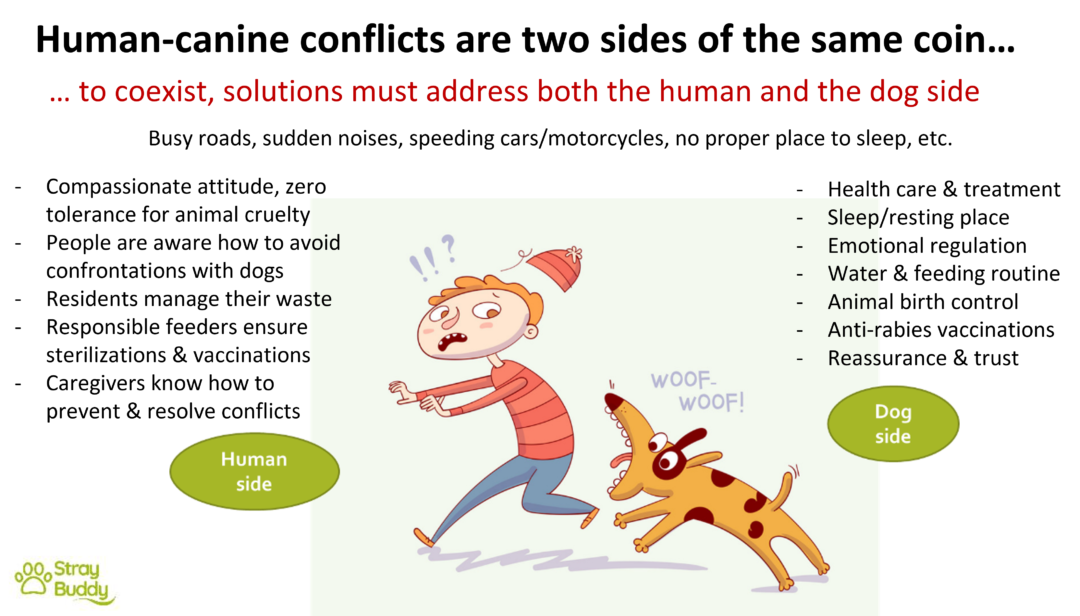
Human–dog conflict is, of course, not one-sided; there are always two sides of a coin. As highlighted in the Stray Buddy check-list above, coexistence requires addressing both sides of the equation:
- The dog’s needs: food, rest, safety, health etc.
- The human environment: behaviour, movement, waste, awareness
When these are misaligned, conflict emerges—not because of a “problem dog,” but because of dysregulated interactions.
Effective Interventions On The Dog Side
As we already saw in the previous blog “When Street Dogs Are Called “Aggressive”, Removal Is Not The First Option”, most conflict situations can be resolved locally (in-situ) without removing the dogs.
Small interventions, such as stabilising access to food and water resources, improving sleep by providing quiet and safe places to rest, sterilising and vaccinating while also preventing and addressing health issues in community dogs, can have a large positive impact.
The actions on the dog side are not isolated—they work as a system. And when applied in combination, situationally and locally, they regulate behaviour at its source.
The Human Side Of This Coin: From Reaction to Responsibility
Real change in resolving human-animal conflicts begins with a reflection on our own behaviour. Interestingly, companion animals like dogs often mirror our behaviour and energies as has also been described in our earlier blog “I Am Only Reflecting Your Inner State Of Being!”.
This reflection is most easily noticeable in the behaviour of our pet dogs. When we are relaxing, taking deep breaths, our pets usually calm down as well. This is called “co-regulation”. When we get excited, our pets usually start getting aroused. When we are angry, loud or hostile, the dogs often respond with their fight, flight, freeze or fawn response.
Human beings are said to differ from other animals in their ability to reflect on their own behaviour. When humans take responsibility to change their behaviour, they can actually change the outcome in their interactions with community dogs.
Changing human behaviour is, however, not easy. This requires an open mind and a willingness to turn inwards, before we engage with others. It also requires a compassionate and empathetic attitude towards our neighbours; resorting to dialogues instead of complaining and pointing fingers at each other.
And often there are also misunderstandings due to a lack of knowledge. By increasing awareness of residents through facts, scientific resources and good practice examples, by working alongside with Residents’ Welfare Associations to experiment with solution interventions, by demonstrating what actually works, by educating youth and by showing a lot of patience and compassion towards fellow humans who are fearful for dogs, we could aim at:
- Reducing harassment
- Teaching safe interaction
- Reducing traffic speed
- Managing movement patterns
- Managing waste and litter
From Awareness to Action: Engaging the Community
In Stray Buddy communities, over the past years, we actively experimented with a range of initiatives to make people more aware of dog behaviour as well as their own body language in interactions with community animals. These activities included youth-focused activities such as quizzes, games, storytelling, songs, water bowl painting, and drawing, poster, and photo competitions.
At the same time, we initiated dialogues with RWA executives and organise information sessions for security guards, shop owners, and residents to build shared understanding and responsibility. Community events such as Holi Carnivals and participation in Diwali Melas create informal, positive spaces for interaction.
We also helped residents become familiar with the dogs in their neighbourhood through simple but powerful tools like “call-my-name-and-I’ll-be-your-friend” posters placed in areas where the dogs usually spend time. Caregivers are supported in adding customised QR-coded labels to the collars of community dogs, linking to online profiles with details such as the dog’s name, area, caregiver, and sterilisation and vaccination status on the Stray Buddy platform.
A few of these resources are available in the “Resources” section of this website (we are currently working to update this section), while more materials and examples can be shared on request.
We encourage and empower communities to take self-responsibility for peaceful coexistence in their own area by adopting a practical and systematic five-step approach:
- Map your dogs, their territory and caregivers and maintain dog records.
- Feed your dogs responsibly and identify suitable feeding spots.
- Sterilise your community dogs to control their population.
- Vaccinate your community dogs and take care of their health.
- Raise awareness and prevent / resolve conflicts amicably.
Be Part Of The Solution, Not Part of The Problem
When communities begin to shift on the human side, everything changes. A compassionate attitude combined with zero tolerance for animal cruelty sets the foundation for safer shared spaces. When people understand how to avoid confrontations with dogs, fear reduces and incidents become preventable.
When residents take responsibility for managing waste, and feeders ensure sterilisation and vaccination, the environment itself becomes more stable and predictable. And when caregivers are equipped with the knowledge and skills to prevent and resolve conflicts, they become anchors of balance within the community.
In such an ecosystem, conflict does not disappear overnight—but it becomes manageable, reducible, and often preventable.
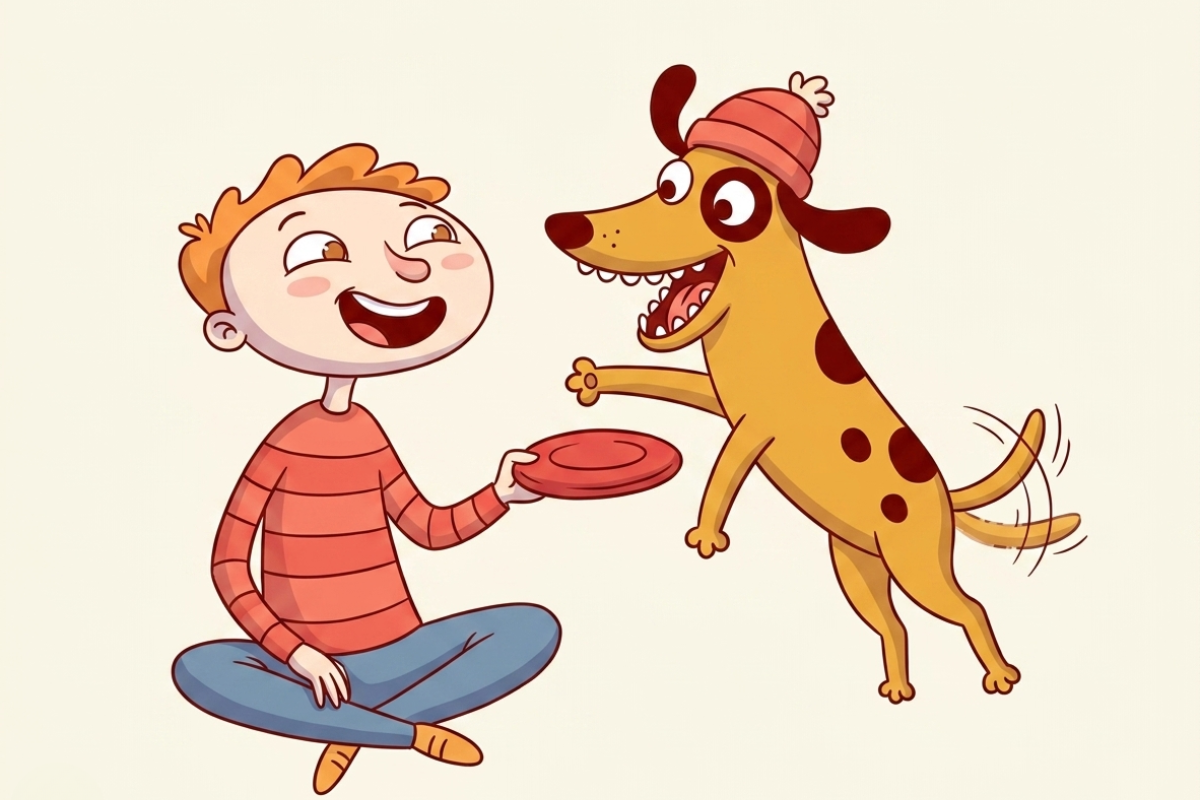
Because ultimately, peaceful coexistence is not just about managing community dogs—it is about people choosing to be part of the solution.
Great article, very helpful!