
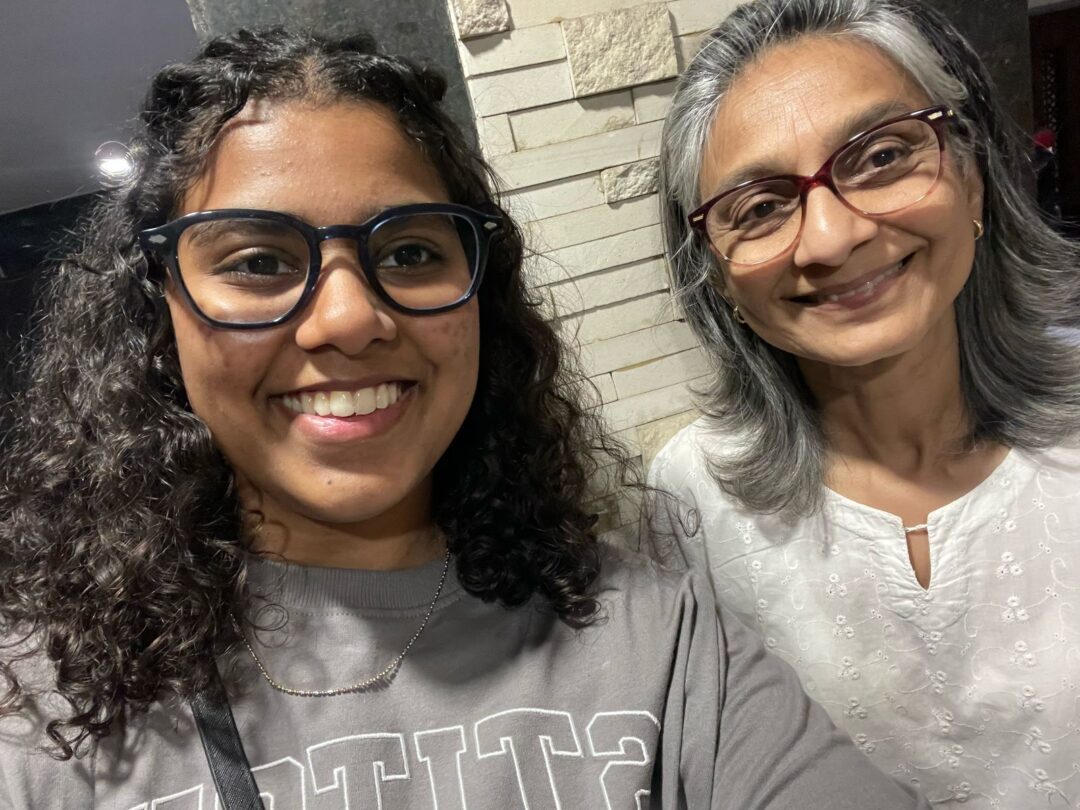
An Interview by Vidita, Youth Ambassador of the Stray Buddy Program
At 17, Vidita already knows what it means to care for animals—and she’s learning from the best. She had the privilege of interviewing Chhavi Aunty, a warm-hearted and wise woman whose life has been transformed by street dogs.
Chhavi Aunty has been a counsellor in Delhi government schools for nearly three decades. Her true calling, however, came unexpectedly—through a family of community dogs behind her home in Ekta Apartments in 2013.
Vidita: What first inspired you to take care of street dogs?
Chhavi Aunty: It all started with a mother dog who gave birth to eight adorable puppies behind my house. Her little pack—complete with the father and three friends—charmed me. I used to spend time playing with the pups, and something just clicked. That’s when my caretaking journey began.
Vidita: How long have you been doing this now?
Chhavi Aunty: Since 2015—so, around ten years. One of the early turning points was when a three-legged dog got hit by a car. With the help of my neighbor Divya, who runs Tails of Compassion, I rushed him to the vet. That moment taught me how important quick care is. Later, when another dog’s skin started tearing, I took over his treatment—cleaning, bandaging, and healing him. I’ve learned so much through hands-on experience and some incredible mentors.
Vidita: How would you describe a stray dog?
Chhavi Aunty: To me, a stray dog is like a homeless person—living on the streets, often without support. But some are lucky to have community caregivers who keep them healthy and safe. These dogs start to belong to the neighborhood—they’re our “community dogs.”
Vidita: That sounds like hard work. What keeps you motivated?
Chhavi Aunty: Love. Pure and simple. Community dogs don’t just want food—they crave affection. When they see me, it’s not about what I have in my hands, but that I’ve come. And my support system—especially my son and my brother, who prescribes homeopathy—makes it all possible. I joined Stray Buddy in 2021 to get connected and better support the dogs. The program introduced me to a whole world of like-minded people and new resources.
Vidita: How many dogs are you caring for now, and what does your daily routine look like?
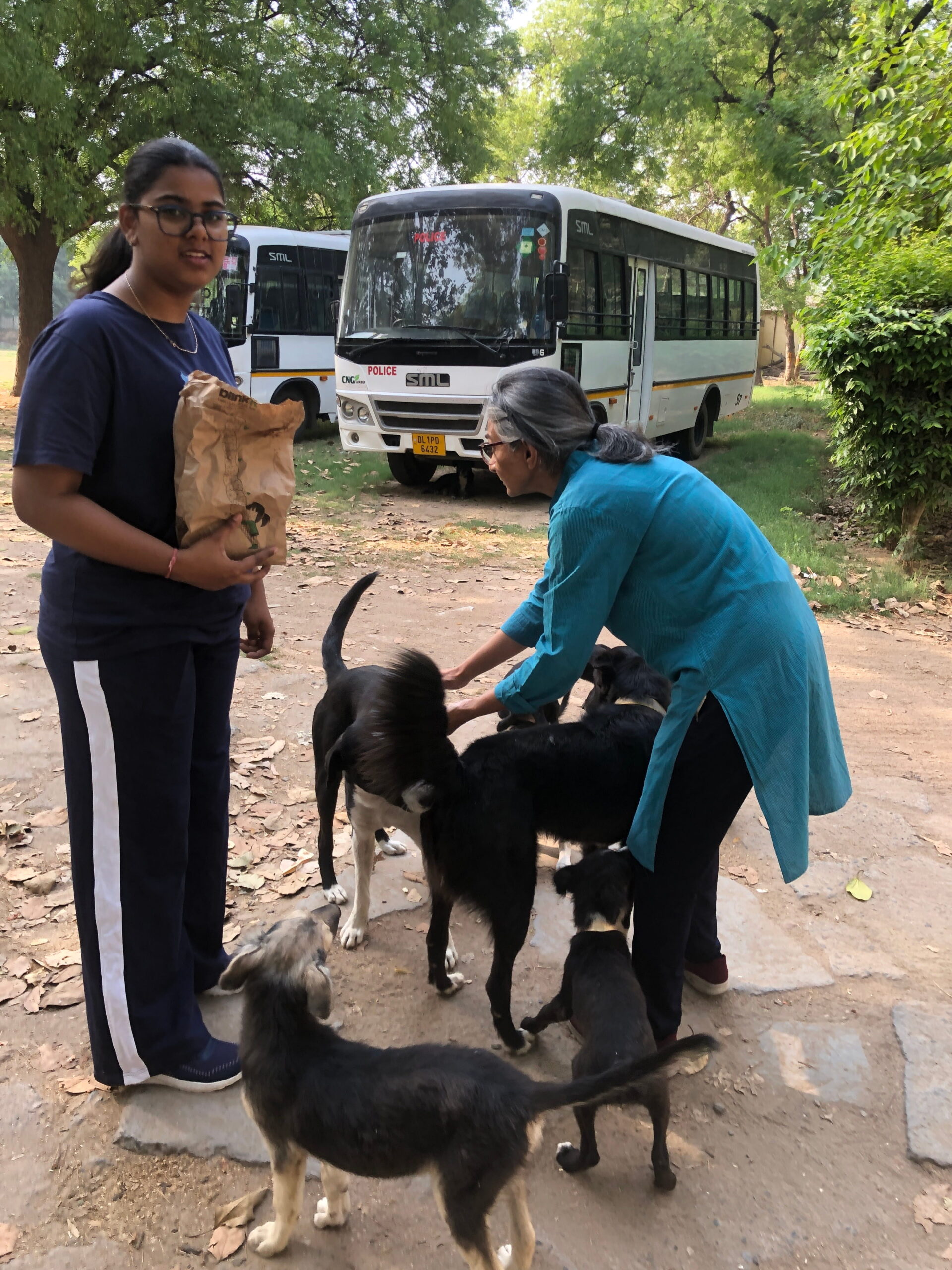
Chhavi Aunty: I care for 23 dogs at the moment. After I return from work, I barely take a sip of tea before heading out to feed and treat them. They get so excited—jumping and wagging their tails. It takes about an hour and a half each evening. If there’s an emergency, I’m up at 5 a.m., like the time Brownie from E-Block fell ill. These dogs are like family.
Vidita: Apart from feeding and emergency medical care, do you also look into their regular health checks?
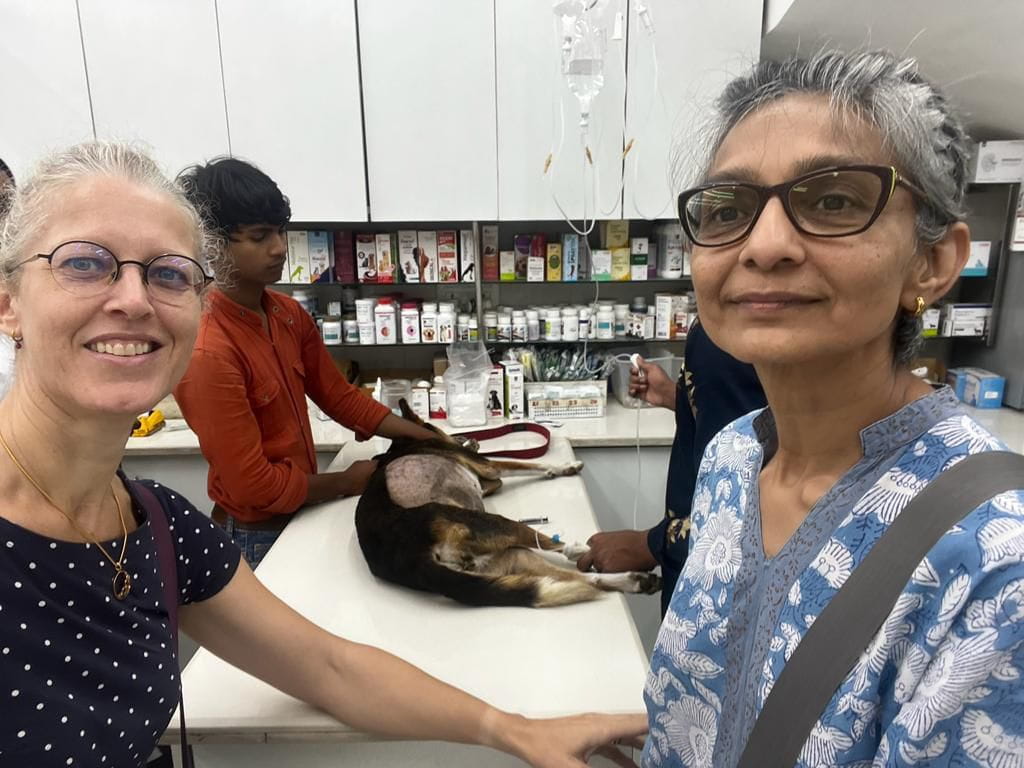
Chhavi Aunty: Oh, yes. I give injections, vaccinations—sometimes with help from my son or Kartik, a friend. The dogs trust me more than strangers, so I try to make it as comfortable as I can. I keep a diary—full of their medical records, histories, dates of vaccinations, everything.
Vidita: How do you help new dogs feel safe?
Chhavi Aunty: I start by feeding them so they become familiar with me. Once they’re comfortable, I deworm them, vaccinate them, and then look into sterilization. It takes about 2–4 months for the whole process.
Vidita: What happens when a dog is aggressive or traumatized?
Chhavi Aunty: If a dog is aggressive, I try medication or, if needed, move them to a shelter. When they’re traumatized or scared, I don’t force anything. I just give food and water. Sometimes, that’s all they need to begin healing.
Vidita: How do you provide clean water and shelter?
Chhavi Aunty: I’ve placed two water bowls outside my home and in feeding areas. I clean and refill them daily. I’ve also built two tents for shelter—though I wish I could do more.
Vidita: What changes would you like to see in how society treats community animals?
Chhavi Aunty: My motto is simple: If you can’t love them, at least don’t hate them. Not everyone can feed or shelter dogs, but everyone can avoid harming them. Let caregivers do their work—don’t harass or ostracize them. They’re giving their time, money, and love to beings who can’t speak for themselves.
I used to shoo dogs away from flower beds, but I never hit them. That’s the least anyone can do—just be neutral if you can’t help.
Vidita: How important is the caregiver community in your work?
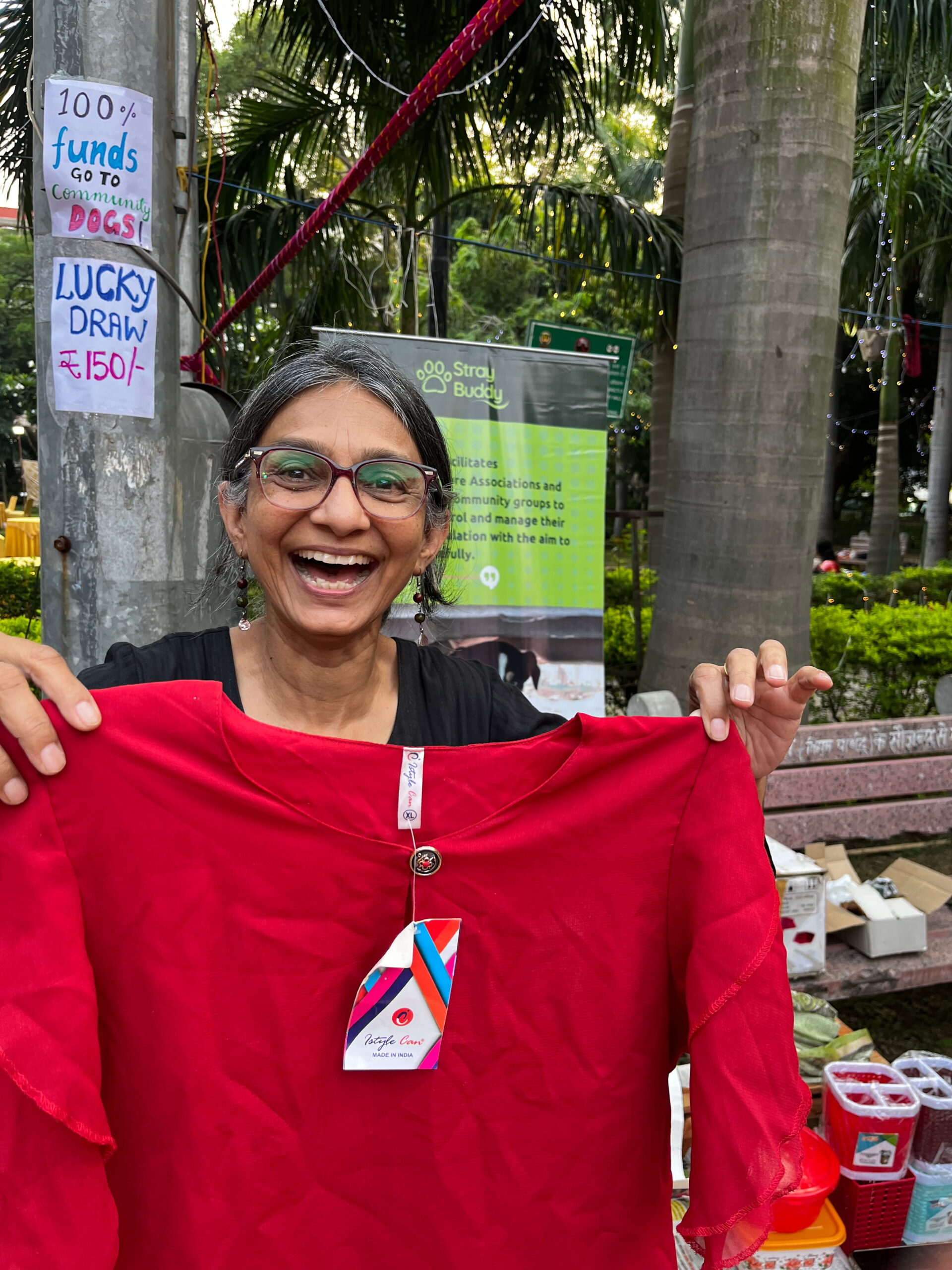
Chhavi Aunty: Invaluable. A group called Saket Caregivers with its active members, became my anchor, and through them, I learned about the broader community of caregivers, forming bonds that made me feel truly supported. The Stray Buddy program connected me to a supportive network of people who not only offered practical assistance but, more importantly, provided moral support. In moments of distress, I knew exactly who to call. Just knowing I’m not alone has made a huge difference.
Vidita: What’s your vision for the future?
Chhavi Aunty: I’ll be retiring soon, and I plan to dedicate more time to three animal shelters I’m already involved with. I dream of starting my own shelter or maybe an animal ambulance. I’d also love to bring sparrows back to Delhi—I miss their chirping.
In a perfect world, every building would care for at least one community dog, especially if that dog sleeps under your car or on your doorstep. Instead of chasing them away with water or crackers, why not show some kindness? After all, dogs are creatures of this earth too—and they deserve better.
Vidita: Thank you, Chhavi Aunty. You’ve shown us that compassion doesn’t need a big stage—just a big heart.
Vidita’s Reflection
Speaking with Chhavi Aunty opened my eyes to the dedication, effort, and heart it takes to care for street animals. Whether it’s tending to wounds, managing behavioral issues, or just offering a warm meal and a gentle touch, she embodies the spirit of quiet heroism.
Chhavi Aunty has been selflessly caring for street dogs in our community—feeding them, getting them vaccinated, dewormed, and working toward sterilization to manage the dog population humanely. Right now, she really needs more support to continue. For more innformation, please write to us on info@straybuddy.in
Every street dog deserves dignity—and one person can make a world of difference.
About the interviewer: Vidita is a 17-year-old Youth Ambassador in the Stray Buddy Program of All Creatures Great and Small (ACGS).